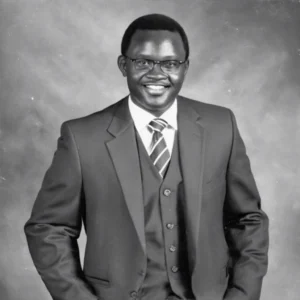
ANC national chairperson Gwede Mantashe has denied accusations of vote-buying after a door-to-door campaign encounter in Freedom Park, Johannesburg, on Saturday, 5 September 2026, in which he questioned a resident about their RDP house and child support grant, telling them to acknowledge what the ANC-led government had delivered. A video of the exchange, posted on social media by Newzroom Afrika, drew widespread criticism, with many South Africans accusing Mantashe of emotional blackmail ahead of the 4 November 2026 local government elections. Speaking to Newzroom Afrika on 6 September 2026, Mantashe rejected the allegations, stating: “I clarify that we’re not buying votes. We give this to society, but the freedom of choice is open to everybody.”
ANC Campaign Strategy And Social Grant Leverage
During the Freedom Park walkabout, Mantashe told a resident that an RDP house is an asset worth approximately R250,000 provided by the government, and questioned whether the resident’s grandchildren received child support grants. “If you get an asset from the government which is worth R250,000 and you stay in it and you come out of it and say nothing is happening, it means that you don’t appreciate that this government has given you an asset and you’re staying in it,” Mantashe said, as reported by Jacaranda FM. The video was shared on X by sports broadcaster Robert Marawa, drawing tens of thousands of views and divided reactions across social media platforms.
The ANC’s 2026 local government election manifesto, published in August 2026, proposes automatically enrolling approximately 30-million social grant recipients onto municipal indigent lists for free basic water, electricity, sanitation and refuse removal, without requiring an application. According to the Sunday Times, SASSA currently disburses social grants to approximately 28-million South Africans, meaning nearly half of South African residents rely on some form of grant. The manifesto frames the proposal as removing bureaucratic barriers, but critics may view it as leveraging state resources for electoral advantage at a time when the ANC faces significant competition in KwaZulu-Natal and Gauteng.
Historical Pattern And MK Party Response
The controversy touches a nerve within the ANC because vote-buying allegations have surfaced internally. In December 2022, shortly after the party’s national elective conference, Mantashe himself acknowledged that vote-buying was a serious problem, recounting that one person phoned him claiming to have 40 delegates and asking for R100,000, as reported by Pretoria News. The Pretoria News article carrying this account is labelled as opinion rather than news reporting, and its broader characterisation of the ANC’s internal dynamics represents editorial commentary rather than verified fact.
Separately, the MK Party has accused President Cyril Ramaphosa of using a TRC Housing Assistance Reparations programme launch in Ndwedwe, KwaZulu-Natal, as an election stunt ahead of the November polls. MK Party spokesperson Nhlamulo Ndhlela, speaking to The Citizen, described the event as “damage control and vote-seeking in KwaZulu-Natal,” noting that more than 400 families were identified as affected by apartheid-era violence, with just over 200 approved for housing benefits. Ndhlela said the ANC had dragged its feet on TRC recommendations for 32 years and was now timing housing announcements for electoral gain. The 4 November 2026 local government elections will test whether voters accept the ANC’s framing of service delivery as legitimate campaigning or view it as opportunistic electoral manoeuvring.
 English
  Zulu
Zulu