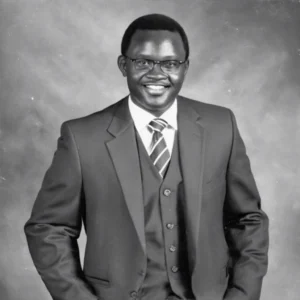
ANC Secretary-General Fikile Mbalula has conceded that his party faces an existential crisis ahead of the 2026 local government elections, following the ANC’s historic loss of its outright parliamentary majority in May 2024 — a decline he attributes in large part to the emergence of the uMkhonto weSizwe (MK) Party. The ANC received just over 40% of the national vote, down from approximately 57.5% in 2019, while the MK Party secured over 14% nationally and 45% in KwaZulu-Natal, decimating ANC support in the province and forcing the party into a Government of National Unity (GNU) with the DA and other parties.
Mbalula Points To MK Party As Decisive Factor
Speaking to media shortly after the IEC declared results on 2 June 2024, Mbalula attributed the ANC’s decline to three main factors: low voter turnout of 58.61%, the formation of Jacob Zuma’s MK Party, and public dissatisfaction over service delivery failures. He was blunt about the impact of Zuma’s decision to form a rival party.
We need to analyse the bleeding that has been brought on by JZ forming a party. If JZ didn’t form the MK party and had supported the ANC, we would not be here talking about so and so.
Mbalula also said the ANC would investigate whether members had clandestinely campaigned for the MK Party during the elections, though no findings from such an investigation have been made public. The ANC lost control of both Gauteng and KwaZulu-Natal and fell below 50% in the Northern Cape, marking its worst electoral performance since 1994.
Liberation Legacy No Longer Enough
By August 2026, at a Special NEC meeting in Boksburg, Mbalula’s language had escalated significantly. He told delegates the ANC would be facing the worst and most difficult elections ever in the November local polls, coming from a base of 40% national support and still shedding voters. Speaking at a church gathering in Katlehong, as reported by African Insider, he framed the crisis in stark terms.
We are under no illusion about what this moment represents, following the outcomes of the 2024 national and provincial elections. We go to the 2026 local government elections confronted by an existential crisis.
Mbalula explicitly stated that the ANC could no longer trade on its liberation struggle credentials, telling supporters: We are not owed anyone’s vote by history. He added that trust, once spent, is earned back one honest act at a time. Despite the severity of the concession, Mbalula confirmed in June 2024 that the ANC leadership, including himself and President Cyril Ramaphosa, would not resign over the poor showing, stating the party had heard the message from voters and would work to regain support through service delivery and accountability.
The ANC’s next test comes in the November 2026 local government elections, where Mbalula has pledged the party will go all out full force to convince voters — though whether the party can reverse its downward trajectory in the face of sustained MK Party growth remains to be seen.
 English
  Zulu
Zulu