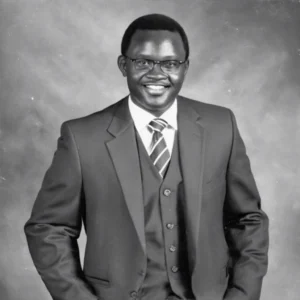
Ronald Lamola, who served as South Africa’s Minister of Justice and Correctional Services from May 2019 to June 2024, is credited with revitalising the prosecution of apartheid-era crimes by improving National Prosecuting Authority (NPA) capacity and increasing the number of Truth and Reconciliation Commission (TRC) cases under active attention to 115 by March 2022, according to Daily Maverick and government records. His efforts led to the 2025 conviction of former Security Branch and Reaction Unit officers for the murder of anti-apartheid activist Caiphus Nyoka and marked a significant shift in government approach toward unresolved TRC recommendations.
NPA Strengthening And Prosecution Of Apartheid-Era Offences
Throughout his tenure, Lamola initiated financial and administrative reforms in the NPA, aimed at enhancing investigative and prosecutorial capacity, as reported by Daily Maverick. The mobilisation of resources resulted in an unprecedented focus on unresolved TRC cases, with over 100 investigations under renewed scrutiny by early 2022—a substantial increase from previous years.
Lamola’s approach backlogged apartheid-era cases and pushed them forward in the legal system, responding to long-standing demands by families of victims and civil society activists. The conviction of former Security Branch officers for Caiphus Nyoka’s murder in 2025 stands as a landmark moment, showing that renewed political will can yield results in cases previously dismissed as cold.
Political Legacy And Ongoing Commitments
After serving as Justice Minister, Lamola was appointed Minister of International Relations and Cooperation in July 2024, underscoring the significance of his administrative leadership. During an official address to Department of Correctional Services staff, Lamola remarked, “Your commitment and dedication continue to inspire us, rest assured that the services you render to the people of South Africa, are of paramount importance.”
In his new portfolio, Lamola continued to engage in debates over historic and current injustices, such as denouncing a US Afrikaner refugee programme as “apartheid 2.0” in 2025, according to Eyewitness News. This demonstrates an ongoing focus on South Africa’s past and its repercussions for present-day policy, both domestically and internationally.
Further updates on progress in unresolved TRC cases and Lamola’s role in government reform are expected as attention continues on legacy justice in South Africa.
 English
  Zulu
Zulu