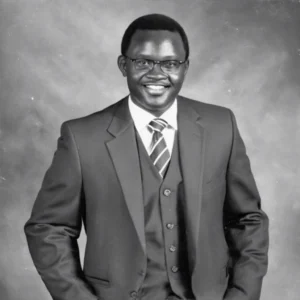
South African Reserve Bank Governor Lesetja Kganyago has stated that years of state capture have severely undermined the country’s economic growth, pointing to institutional destruction and large-scale corruption within the national government and state enterprises as the core reasons for persistent stagnation. Speaking on 5 August 2026 during a public lecture, Kganyago rejected claims that macro-economic policy is at fault, highlighting findings from the Zondo Commission and South Africa’s GDP growth of only 1.1% in 2025 and 0.5% in the first quarter of 2026 as evidence of the enduring cost of state capture.
Governor Links Economic Stagnation To Institutional Damage
During his address, Kganyago argued that the country’s low growth is rooted in the “institutional destruction, a process often called state capture,” rather than in fiscal or monetary policies. “It is wrong and dangerous to argue that our growth stagnation is due to macro-economic policy because, as we’ve seen, many emerging markets adopted similar macro-frameworks, and almost everyone has grown faster than us,” Kganyago said.
The Zondo Commission of Inquiry’s final report, released in 2022, detailed how private interests—including the Gupta family—interfered with appointments, procurement, and policy, causing operational collapse and significant financial losses at key state entities such as Eskom and Transnet. Kganyago insisted, “The essence of state capture is that institutions are no longer run for public benefit. Instead, they are taken over and used to extract resources for private gain.”
Political Context And Policy Implications
The Zondo Commission, established in 2018, identified a network of corruption during former President Jacob Zuma’s administration, pinpointing the entrenchment of the Gupta family and their allies in government decision-making. Official findings linked state capture to sharp declines in investment, reduced trust in public entities, and chronic operational failures, especially at state-owned enterprises tasked with delivering reliable power and logistics services.
Kganyago, who has served as Reserve Bank Governor since 2014 and was announced as Stellenbosch University Chancellor in 2025, reiterated calls for institutional reforms and strong governance to reverse the economic damage. The National Treasury’s target of 1.4% growth for 2025 was missed, with official data showing just 1.1%, highlighting ongoing challenges in restoring confidence and capacity within the public sector.
The Reserve Bank has indicated it will continue to monitor risks stemming from governance failures, with further reform measures expected to be tabled before the end of the financial year.
 English
  Zulu
Zulu