
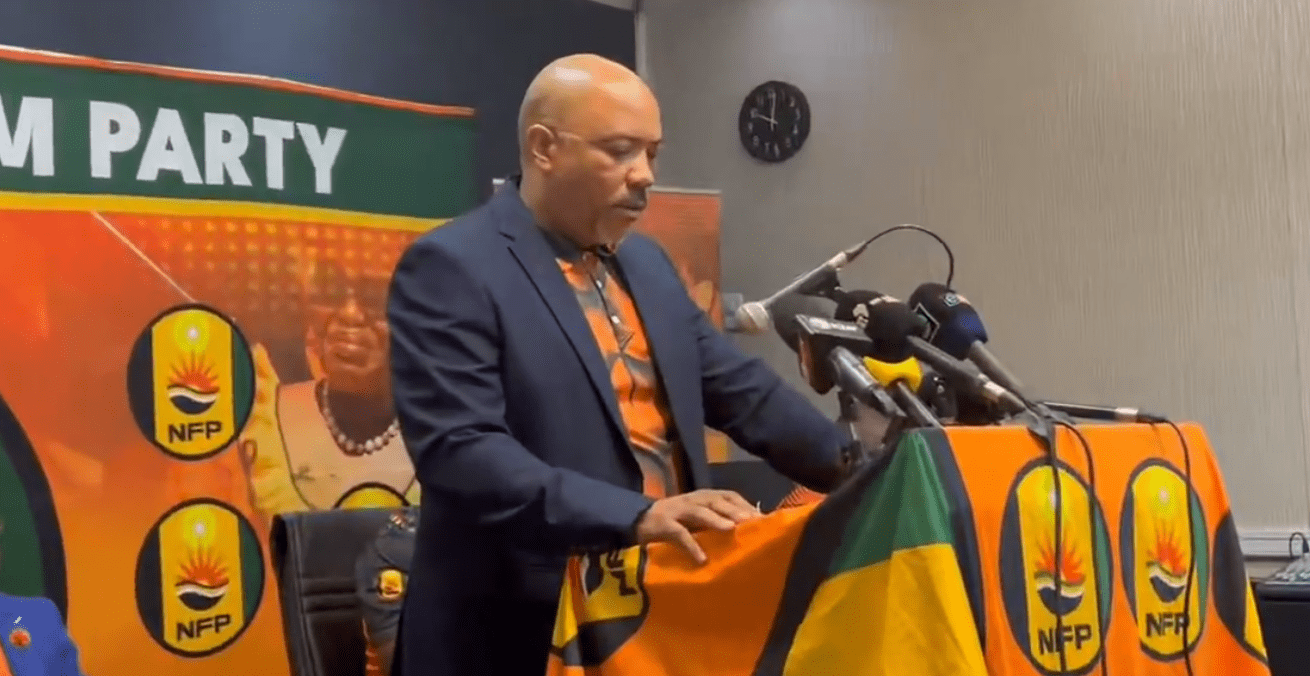
KwaZulu Natal’s already fragile Government of Provincial Unity is facing its most serious test yet, as political parties scramble to secure the National Freedom Party and prevent a collapse that could dramatically reshape power in the province. The sudden withdrawal of the NFP from the governing arrangement has injected fresh uncertainty into an administration that has struggled to establish coherence since its formation.
The decision has placed the province at a crossroads, with two stark outcomes emerging. Either the unity government survives through renegotiation and compromise, or it collapses entirely, opening the door for a new alignment that could place decisive authority in the hands of the MK Party. For residents already weary of political instability, the stakes could hardly be higher.
NFP Withdrawal Sends Shockwaves
The political tremor was triggered last Friday when the NFP formally announced it was exiting the coalition. The move sent shockwaves through the legislature, catching coalition partners off guard and exposing just how precarious the unity government’s internal balance has become. Since its inception, the GPU has relied on delicate cooperation rather than shared ideology.
The NFP’s withdrawal has threatened to unravel that arrangement entirely. With no immediate clarity on whether the party intends to return, renegotiate, or chart a new political path, the provincial government has been left operating under a cloud of uncertainty that has both political and administrative consequences.
ANC Moves Quickly To Contain Fallout
In an urgent attempt to stabilise the situation, the African National Congress was the first coalition partner to reach out to the NFP. Within hours of the withdrawal announcement, the party formally requested talks, signalling concern over the broader implications for governance in the province.
In correspondence seen by the media, ANC provincial task team coordinator Mike Mabuyakhulu warned that the NFP’s decision carried far reaching consequences for KwaZulu Natal, both in the immediate term and over the longer horizon. His intervention underscored the anxiety within ANC ranks that the coalition’s collapse could permanently alter the provincial power map.
Door Left Open For Negotiation
After several days of silence that fuelled speculation about an irreversible split, the NFP has now agreed to meet with the ANC later this week. The development has offered a narrow window of hope that dialogue may yet avert a full scale collapse of the unity government.
While the agreement to meet does not guarantee reconciliation, it suggests the NFP has not entirely closed the door on the current arrangement. Whether the talks lead to compromise or simply clarify irreconcilable differences remains an open question.
DA Appeals For Stability And Dialogue
The Democratic Alliance has also stepped into the unfolding crisis, appealing directly to the NFP to reconsider its position. DA provincial chairperson Dean Macpherson wrote to the party on Tuesday, warning that a breakdown of the coalition would amount to a total collapse of provincial stability.
Macpherson stressed that ordinary residents would bear the cost of further political turmoil, particularly after years marked by inconsistent governance and service delivery failures.
We still regard the NFP as partners for progress in KZN
he said, adding that the DA sought clarity on concerns raised publicly by NFP president Ivan Barnes and hoped solutions could still be found within the existing framework.
Unity Government Struggles To Inspire Confidence
The Government of Provincial Unity was formed without the MK Party and was presented as a stabilising compromise following the 2024 elections. However, its record has been mixed at best. Persistent internal tensions, policy paralysis and slow decision making have undermined its credibility.
For many communities, particularly those grappling with unemployment and poverty, the promises of renewal have failed to materialise. In some areas, residents report continued hardship and deepening frustration, with political leaders appearing more focused on coalition arithmetic than tangible improvements to daily life.
MK Party Senses A Strategic Opening
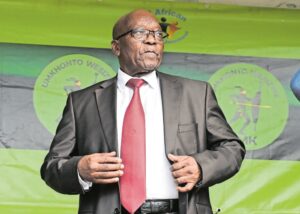
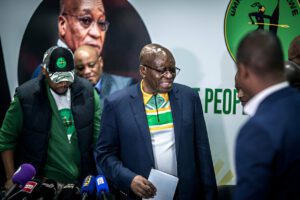
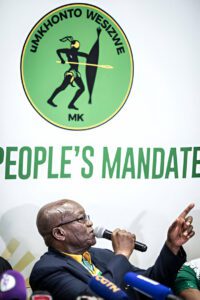
Sensing an opportunity amid the uncertainty, the MK Party has also written to the NFP, proposing discussions aimed at forging a new alliance alongside the Economic Freedom Fighters. Such a realignment would dramatically alter the balance of power in the provincial legislature.
If successful, an MKP EFF NFP bloc would command enough seats to unseat the current IFP ANC DA arrangement. The prospect has intensified pressure on the NFP, now firmly positioned as a kingmaker in KwaZulu Natal’s volatile political landscape.
Legislature Numbers Shape The Battle
The significance of the current manoeuvring becomes clearer when viewed against the composition of the provincial legislature. With the MK Party emerging as the largest single party after the May 2024 general elections, even small shifts in allegiance could have decisive consequences.
The table below outlines the critical seat distribution that is driving the urgency of negotiations and counter negotiations.
| Party Or Bloc | Seats In Legislature |
|---|---|
| MK Party | 37 |
| Proposed MKP EFF Bloc | 40 |
| Total Seats In Legislature | 80 |
Province Waits As Talks Loom
As coalition partners queue for talks with the NFP, KwaZulu Natal enters a period of political suspense. Each meeting carries the potential to either restore a fragile balance or accelerate a dramatic realignment that reshapes governance in the province.
For residents watching from the sidelines, the unfolding drama is more than a contest of parties and personalities. It is a test of whether political leaders can prioritise stability and service delivery over power struggles, at a moment when the province can least afford further uncertainty.


 English
  Zulu
Zulu