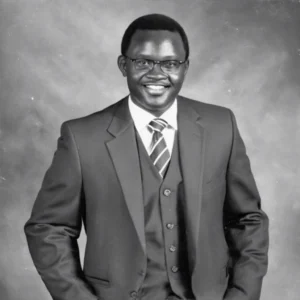
Parliament’s Ad Hoc Committee, established to investigate allegations of criminal infiltration, corruption, and political interference within the South African Police Service (SAPS) and the criminal justice system, has faced mounting logistical and procedural pressures under the chairmanship of Soviet Lekganyane. The committee’s work has spanned several months, with Lekganyane at multiple points acknowledging the difficulty of steering the process amid tight deadlines, witness scheduling disputes, and contested procedural decisions.
Witness Scheduling And Time Constraints
The committee has repeatedly operated under severe time pressure, with Lekganyane informing members in late January 2026 that approximately 10 days remained to conclude hearings. Private investigator Paul O’Sullivan was scheduled to testify on a Tuesday and Wednesday, but his appearance remained uncertain after he indicated he would only participate virtually, according to SABC News.
KwaZulu-Natal Police Commissioner Lieutenant-General Nhlanhla Mkhwanazi, whose allegations prompted the committee’s formation, testified as the first witness. National Commissioner General Fannie Masemola and Mkhwanazi were later rescheduled to reappear near the end of the programme, having already testified at the outset, the Daily News reported.
Procedural Disputes And Defence Of Committee Integrity
Lekganyane rejected allegations that the committee had been subjected to bribery or duress, following accusations that the EFF blocked the appearance of Deputy Crime Intelligence Head Feroz Khan — a claim the party denied, as reported by eNCA. “There is no other decision that has been taken in our meeting that we were induced, under duress, or that we would have been bribed to arrive at such a decision,” Lekganyane said.
He also indicated that evidence from witnesses who were implicated but did not get an opportunity to testify orally would be included in the committee’s final report. The committee was working towards a 16 July 2026 deadline for the formal adoption of its report, ahead of the final tabling before the National Assembly on 11 September 2026, SABC News reported.
Reform Of Parliamentary Rules On The Horizon
Lekganyane suggested that the committee’s proceedings had exposed gaps in Parliament’s rules governing ad hoc committees, including their powers relative to standing and portfolio committees, their composition, and the hierarchy between them. “We are guided by our terms of reference and whether the evidence that has been presented here satisfies the terms of reference,” he said, according to the Daily News.
A central issue under examination was whether Police Minister Senzo Mchunu, who was on special leave, acted independently or under external influence when he ordered the disbandment of the Political Killings Task Team. The committee’s final report, regardless of length, would be scrutinised paragraph by paragraph before submission, Lekganyane confirmed.
 Zulu
Zulu  English